Wild clary, Vervain sage, Wild sage,
Hebrew: מרווה מצויה, Arabic: قصعين رعي الحمام
| Scientific name: | Salvia verbenaca L. | |
| Synonym name: | Salvia clandestina L. | |
| Common name: | Wild clary, Vervain sage, Wild sage | |
| Hebrew name: | מרווה מצויה | |
| Arabic name: | قصعين رعي الحمام | |
| Family: | Labiatae / Lamiaceae, שפתניים |
|
| Life form: | Hemicryptophyte | |
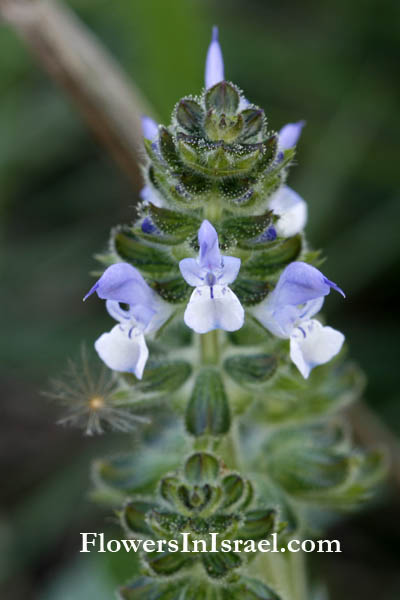
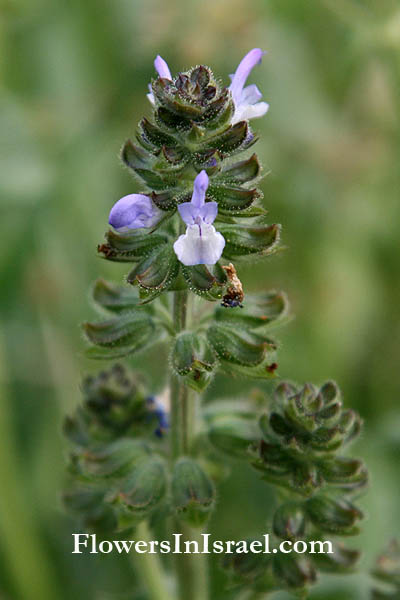
| Stems: | Stems nearly upright, 60 cm high | |
| Leaves: | Opposite, rosette, entire, dentate or serrate | |
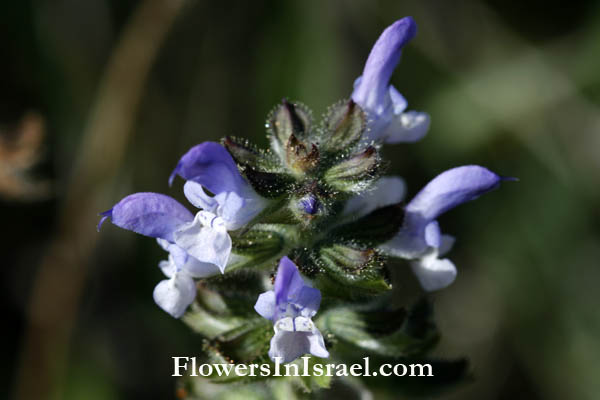
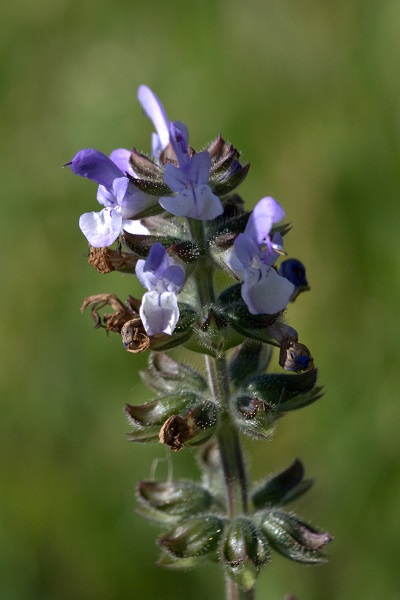
| Flowers: | Flowers in whorls, almost naked, containg about six blue, lilach flowers | |
| Fruits / Pods: | Nutlets | |
| Flowering Period: | January, February, March, April, May, November, December | |
| Habitat: | Batha, Phrygana | |
| Distribution: | Mediterranean Woodlands and Shrublands, Semi-steppe shrublands, Shrub-steppes | |
| Chorotype: | Mediterranean | |
| Summer shedding: | Ephemeral |
Derivation of the botanical name: Salvia, Latin salvere, to save, referring to the long-believed healing properties of salvia. Pliny the Elder was the first known to use the Latin name salvia. verbenaca, resembling Verbena. clandestina, secret, hidden. The Israeli botanists Dr. Ephraim and Hanah Hareuveni pointed out that the architecture of the vertical inflorescence of this species of Salvia resembles the shape of the Menorah, in particular—the Salvia Palaestina. Therefore, they suggested that it had inspired the design of the Menorah. Moreover, based on etymology perspectives they suggested that the Hebrew word “Marva, מרווה” (Salvia) was originated from the Hebrew word “Moriah” (the Temple Mount name), reflecting the connection between this plant and the Menorah, which was situated inside the Holy Temple in Jerusalem.
|