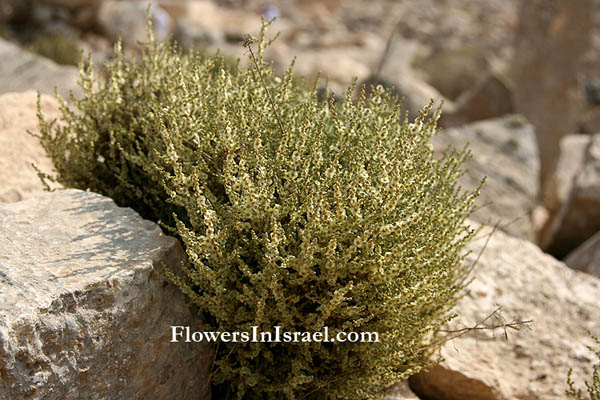
מלחית חומה
| Scientific name: | Salsola inermis Forssk. | |
| Common name: | Unarmed Saltwort | |
| Hebrew name: | מלחית חומה | |
| Family: | Chenopodiaceae, סלקיים |
|
| Life form: | Therophyte, annual | |
| Succulence: | Leaf succulent | |
| Leaves: | Alternate, scale | |
| Flowers: | Green | |
| Flowering Period: | July, August, September | |
| Habitat: | Shrub-steppes, Desert, Salty habitats | |
| Distribution: | Semi-steppe shrublands, Shrub-steppes, Deserts and extreme deserts | |
| Chorotype: | Saharo-Arabian | |
| Summer shedding: | Ephemeral |
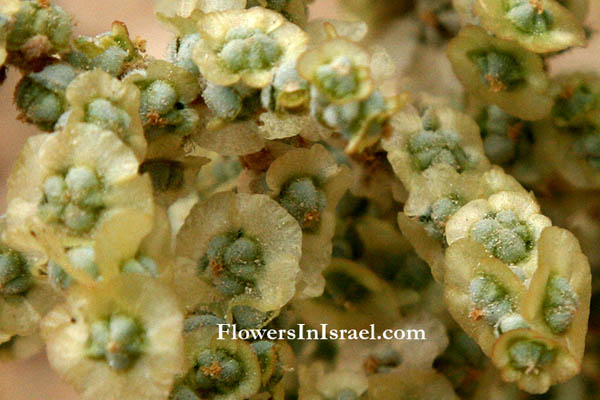
Derivation of the botanical name: Salsola, Latin salsus, salty. inermis, unarmed, weaponless, defenseless; toothless; stingless; not spiny. The Hebrew name: מלחית, milchit, saltwort, salsola, formed from מלח, melach (=salt), with suffix ית, it.
Salsola inermis germinates in the deserts of Israel at the beginning of the growing season. Based on the amount of rain, germination takes place from December to March. Mass germination takes place after heavy rain, mainly in disturbed areas, where the soil crust was removed or damaged, and in cracks in the soil crust. The seeds can germinate in very small amounts, even in the summer, when the amount of water in the soil is sufficient. 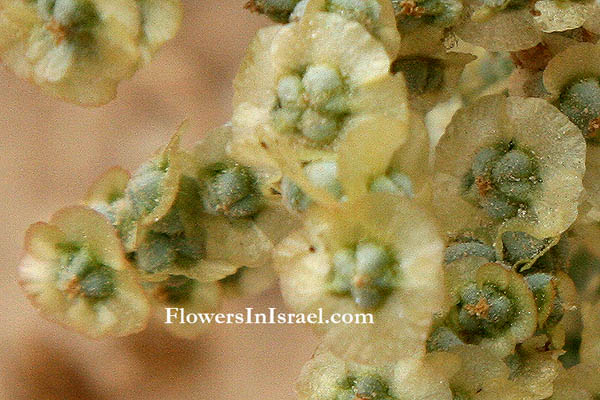
|