Hebrew: רומוליאה סגלולית, Arabic: الرومولية الزعفرانية
| Scientific name: | Romulea bulbocodium (L.) Sebastiani & Mauri | |
| Synonym name: | Ixia bulbocodium L. | |
| Common name: | Crocus-leaved romulea | |
| Hebrew name: | רומוליאה סגלולית | |
| Arabic name: | الرومولية الزعفرانية | |
| Family: | Iridaceae, אירוסיים |
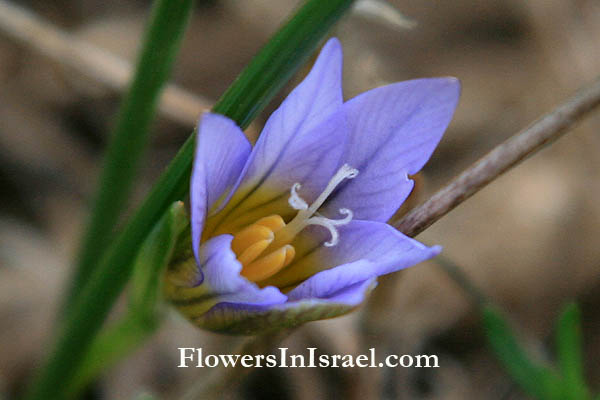
Location: Bnei Zion Nature Reserve (Sharon) |
| Life form: | Geophyte | |
| Leaves: | Rosette, entire, smooth | |
| Flowers: | Lilach, violet | |
| Flowering Period: | January, February, March | |
| Habitat: | Batha, Phrygana, Humid habitats | |
| Distribution: | Mediterranean Woodlands and Shrublands, Montane vegetation of Mt. Hermon | |
| Chorotype, טיפוס התפוצה: | Mediterranean | |
| Summer shedding: | Ephemeral |
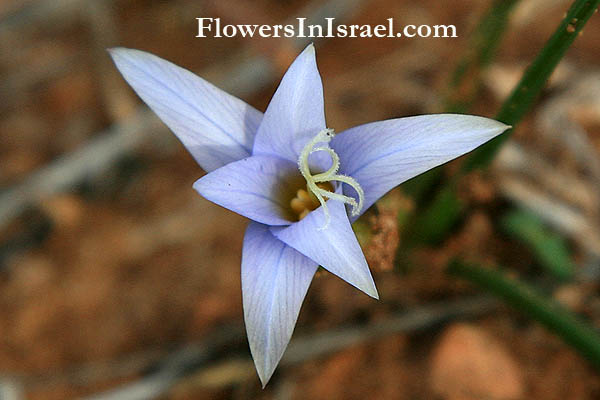
Location: Bnei Zion Nature Reserve (Sharon) Derivation of the botanical name: Romulea , named for Romulus, one of the mythical founders of Rome in 753 BCE, son of Mars and Rhea Silvia and twin brother of Remus (together they were abandoned as babies, suckled and raised by a she-wolf); the type species of the genus being common around Rome. bulbocodium, bulbos, βολβοϛ, bulbous root, bulb; onion; o, connective vowel in botanical Latin; codion, κωδιον, fleece, sheep skin; meaning wooly bulb. Ixia, Greek ixos, "mistletoe or bird-lime" in reference to the sticky sap. The Hebrew name: רומולאה, romulea, from the scientific name.
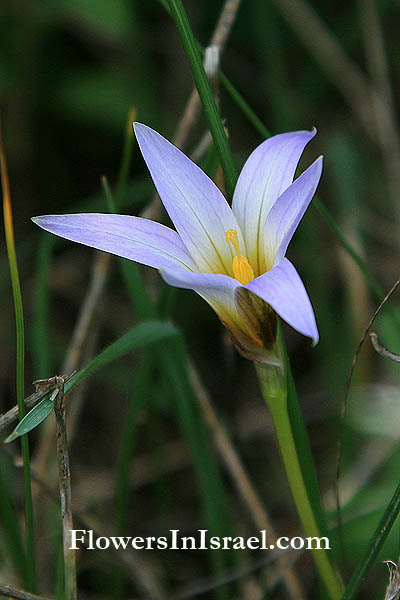
Location: Bnei Zion Nature Reserve (Sharon) 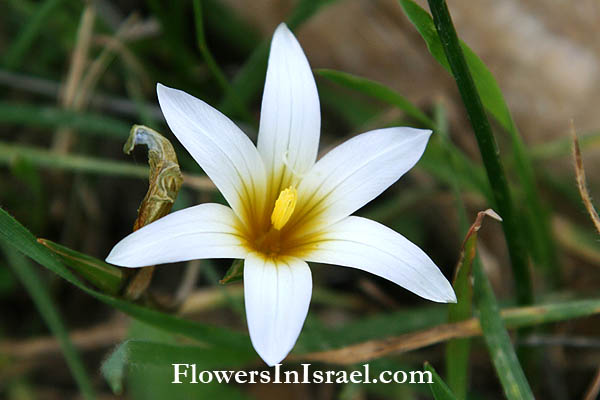
Location: Bnei Zion Nature Reserve (Sharon) 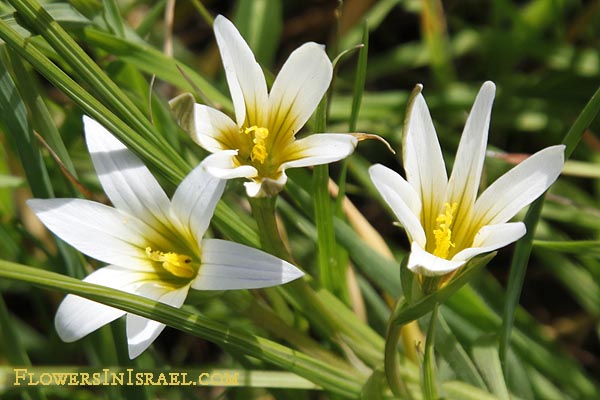
Location: Golan, Nov wetland |