Hebrew: צנון פיגיוני, Arabic: الفجل المنقاري
| Scientific name: | Raphanus rostratus DC. | |
| Synonym name: | Raphanus pugioniformis Boiss. | |
| Common name: | Dagger Radish | |
| Hebrew name: | צנון פיגיוני | |
| Arabic name: | الفجل المنقاري | |
| Family: | Cruciferae / Brassicaceae, מצליבים |
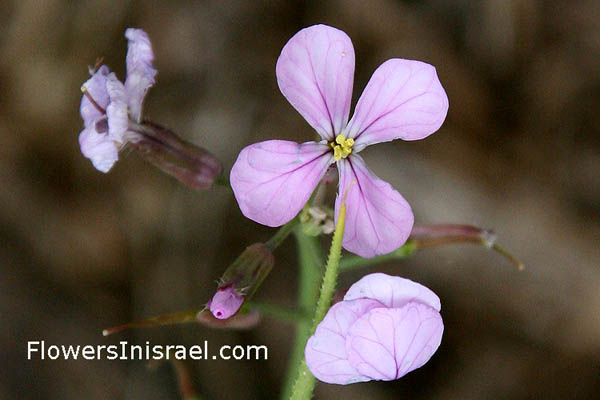
|
| Life form: | Therophyte, annual | |
| Leaves: | Alternate, dissected, dentate or serrate | |
| Flowers: | Violet | |
| Flowering Period: | March, April | |
| Habitat: | Batha, Phrygana | |
| Distribution: | Mediterranean Woodlands and Shrublands, Semi-steppe shrublands, Montane vegetation of Mt. Hermon | |
| Chorotype: | Mediterranean | |
| Summer shedding: | Ephemeral |
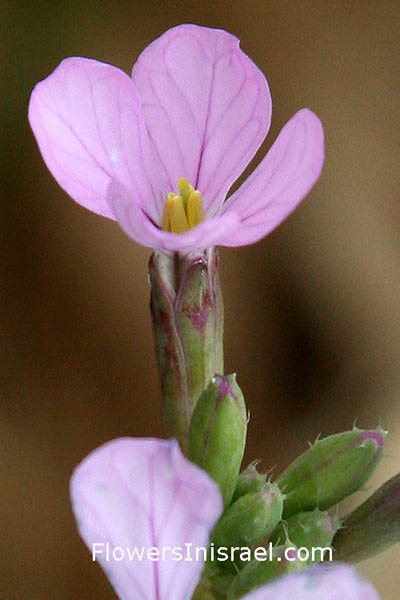
Derivation of the botanical name: Raphanus, Greek raphanos, "quick-appearing" because of the rapid germination of the seeds. rostratus, beaked. pugioniformis, dagger-shaped. The Hebrew name: צנון, znon, radish (Probably so called because of its bad odor and related to Arabic: sunan ( = bad odor).]
Pliny (23-79 CE), Natural History, Book XIV.XXVI.78-88 : 'In Egypt the radish is held in remarkable esteem because it produces oil, which they make from its seed. The people are very fond of sowing radish seed if opportunity offers, because they make more profit from it than from corn and have a smaller duty to pay on it, and because no plant there yields a larger supply of oil. ...and in Egypt, where they are remarkeble for sweetness'. He also quotes the Egyptians for using it for medical purposes. 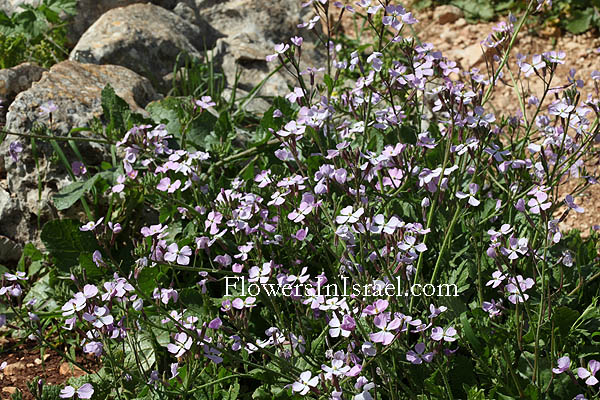
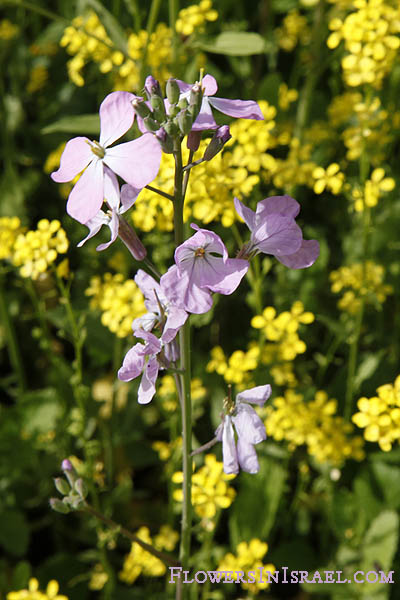
Location: Road 87, Beit Saida Valley (northeastern corner of the Sea of Galilee) |