Hebrew: עופרית אירופית, Arabic: الرصاصية الأوروبية
| Scientific name: | Plumbago europaea L. | |
| Common name: | European Leadwort | |
| Hebrew name: | עופרית אירופית | |
| Arabic name: | الرصاصية الأوروبية | |
| Family: | Plumbaginaceae, עפריתיים |
|
| Life form: | Hemicryptophyte | |
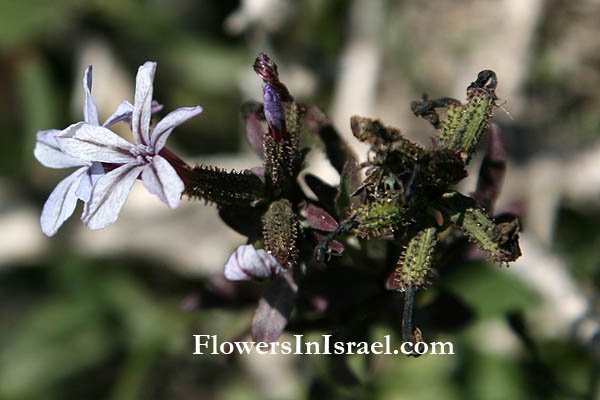
| Leaves: | Alternate, entire | |
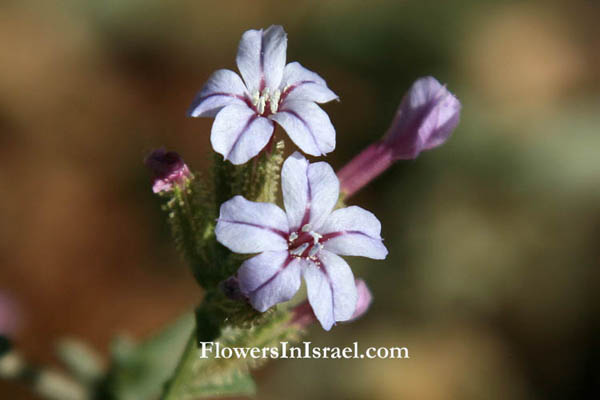
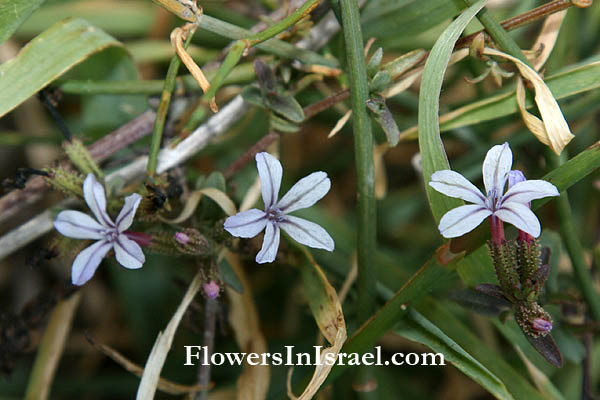
| Flowers: | Pink, violet | |
| Flowering Period: | June, July, August, September, October, November | |
| Habitat: | Batha, Phrygana | |
| Distribution: | Mediterranean Woodlands and Shrublands, Semi-steppe shrublands, Deserts and extreme deserts, Montane vegetation of Mt. Hermon | |
| Chorotype: | Med - Irano-Turanian | |
| Summer shedding: | Perennating |
Derivation of the botanical name: Plumbago, Latin, plumbum, lead; agere, to resemble; Pliny suggested it was cure for lead poisoning which was a scourge in Roman cities. In France the root is steeped in olive oil by country folk and used to combat dental abscesses; hence the common name Dentallaria. europaea, European. The Hebrew name: עופרית, ofrit, from עופרת, oferet, lead, related to Akkadian: abdru (name of a metal, possibly lead or magnesium).
|