Hebrew: נוניאה כרסנית
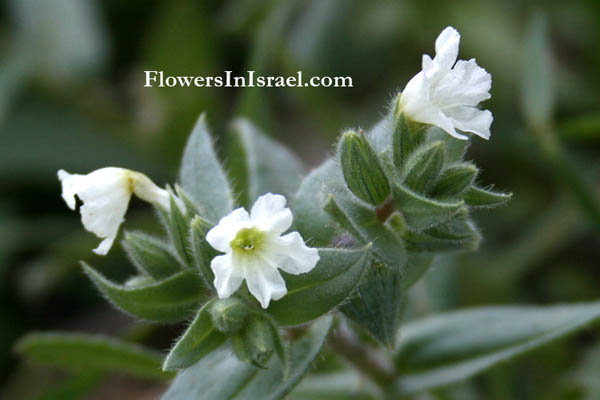
| Scientific name: | Nonea echioides (L.) Roemer et Schultes | |
| Synonym name: | Nonea ventricosa (Sm.) Griseb. | |
| Common name: | Monkswort | |
| Hebrew name: | נוניאה כרסנית | |
| Plant Family: | Boraginaceae, זיפניים |
|
| Life form: | Annual | |
| Stems: | 5-12cm high, ascending, little branched | |
| Leaves: | Alternate, lanceolate to oblong-lanceolate, acute to subotuse entire, smooth | |
| Inflorescence: | Flowers in bracteate, terminal cymes | |
| Flowers: | White , pale yellowish corolla with cylindrical tube , infundibuliform limb 4-5mm in diameter, divided to c. 1/2 into lobes which are wider than long | |
| Fruits / pods: | Nutlets | |
| Flowering Period: | March, April | |
| Habitat: | Batha, Phrygana | |
| Distribution: | Mediterranean Woodlands and Shrublands, Semi-steppe shrublands, Shrub-steppes | |
| Chorotype: | Med - Irano-Turanian | |
| Summer shedding: | Ephemeral |
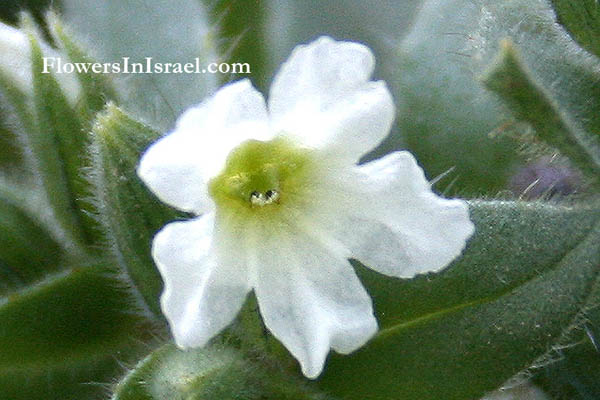
Derivation of the botanical name: Nonea, Nonnea, for Johann Philipp. Nonne (1729–72), botanical writer, and Professor of Medicine from Erfurt, Germany. echioides, resembling the genus Echium, Greek echis, a viper, the nutlets appearing to represent a viper's head. ventricosa, swollen on one side. The Hebrew name: נוניאה, nonea, transliteration from the scientific name.
|