Hebrew: פשתה אשונה, Arabic: كتان
| Scientific name: | Linum strictum L. | |
| Common name: | Upright Flax | |
| Hebrew name: | פשתה אשונה | |
| Arabic name: | كتان | |
| Family: | Linaceae, פשתיים |
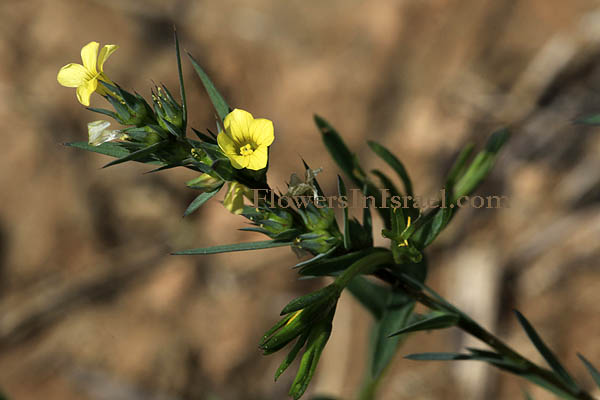
Location: Bene Zion Nature Reserve |
| Life form: | Therophyte, annual | |
| Stems: | 10–45 cm high, robust, seldom branched | |
| Leaves: | Alternate, entire, minutely serrulated margins | |
| Inflorescence: | A dense, spike-like cyme or a corymb | |
| Flowers: | Sessile or subsessile, thick pedicels, sepals 4–6 mm long, ovate-lanceolate, long-acuminate; petals 6–12 mm long; yellow | |
| Fruits / pods: | subglobose capsule 2-2.5 mm long | |
| Flowering Period: | March, April | |
| Habitat: | Batha, Phrygana | |
| Distribution: | Mediterranean Woodlands and Shrublands, Semi-steppe shrublands, Shrub-steppes | |
| Chorotype: | Mediterranean | |
| Summer shedding: | Ephemeral |
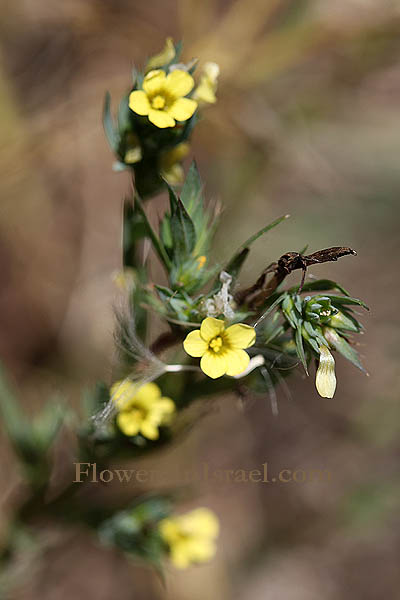
Location: Bene Zion Nature Reserve Derivation of the botanical name: Linum , the Latin name for flax. strictum, strict , "pulled together, close; rigid", drawn close together, very upright. The Hebrew name: פשתה, pistu; Akkadian language: pistu, Phoenician language: foist.
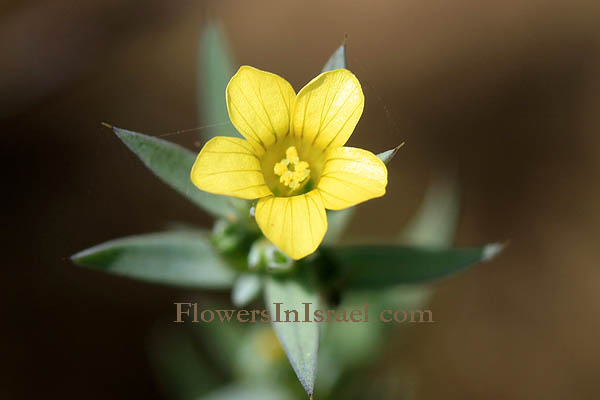
Location: Bene Zion Nature Reserve |