Hebrew: ערטנית השדות, Arabic: رجل الأسد
| Scientific name: | Leontice leontopetalum L. | |
| Common name: | Rakaf, Leontice, Lion's Leaf, Lion's Turnip | |
| Hebrew name: | ערטנית השדות | |
| Arabic name: | رجل الأسد | |
| Family: | Berberidaceae, Barberry family, ערטניתיים |
|
| Life form: | Geophyte | |
| Stems: | 30-40cm in height, glabrous, fleshy; tuberous rhizome, stout | |
| Leaves: | Alternate, rosette, dissected, dentate or serrate | |
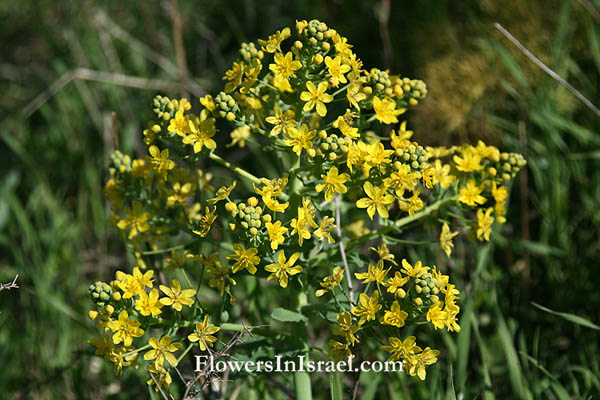
| Inflorescence: | Flowers in terminal branched racemes, a broad pyramidal spike | |
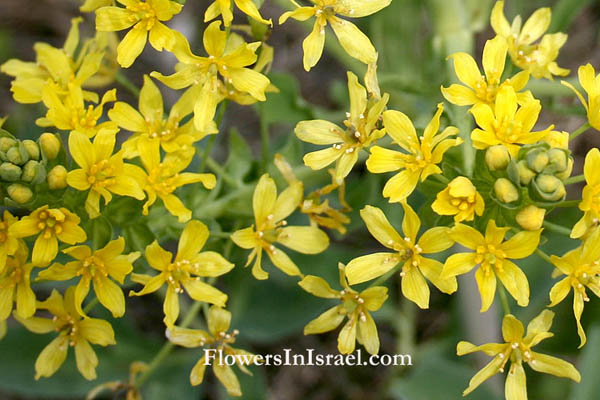
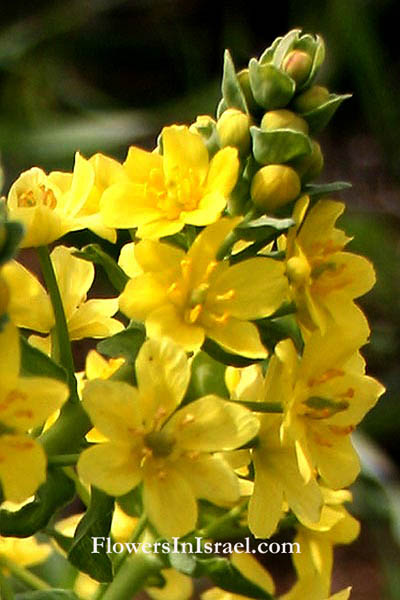
| Flowers: | Yellow, 10-15mm, 6-8 petals | |
| Fruits / pods: | Capsule ovoid | |
| Flowering Period: | February, March, April | |
| Habitat: | Shrub-steppes | |
| Distribution: | Mediterranean Woodlands and Shrublands, Semi-steppe shrublands, Shrub-steppes, Deserts and extreme deserts | |
| Chorotype: | Mediterranean | |
| Summer shedding: | Ephemeral |
Derivation of the botanical name: Leontice, leon, λεων, οντιϛ, a lion; referring to the shape of the leaf. leontopetalum, Greek leonto, Lion; Latin petalum, petal; Lion's-petals. The Hebrew Name: ערטנית, artanit (New Hebrew), lion’s ear, leontice; borrowed from Syrian: ערטניתא, artenita.
|