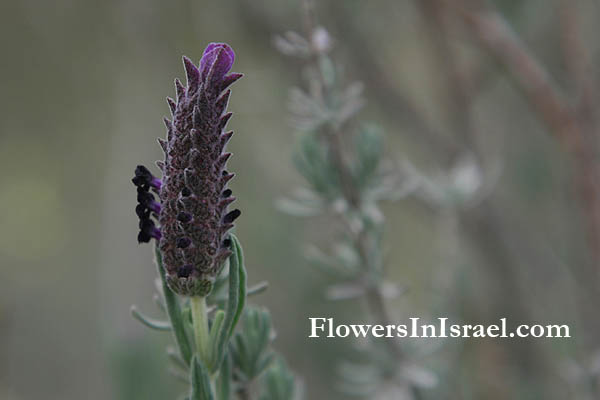
Stoechas Lavender, Topped Lavender,
Hebrew: אזוביון דגול, Arabic: الضرم المكور
| Scientific name: | Lavandula stoechas L. | |
| Common name: | French Lavender, Spanish Lavender, Stoechas Lavender, Topped Lavender | |
| Hebrew name: | אזוביון דגול | |
| Arabic name: | الضرم المكور | |
| Family: | Labiatae / Lamiaceae, שפתניים |
|
| Life form: | Chamaephyte | |
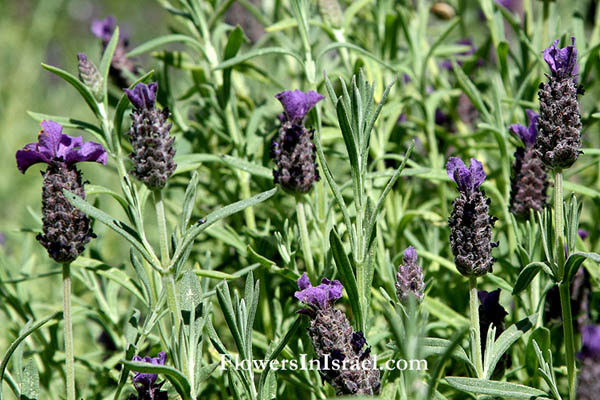
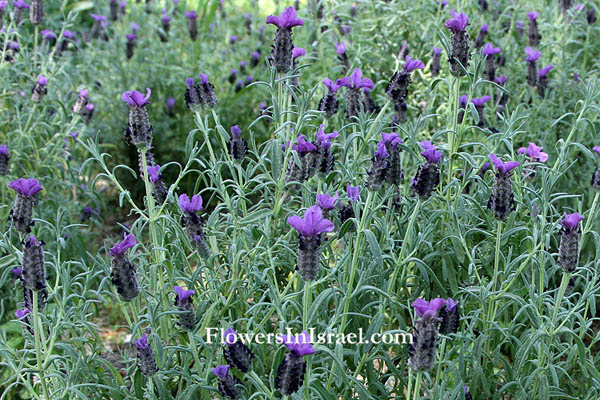
| Stems: | Up to 80 cm, bushy shrub | |
| Leaves: | Opposite, entire, narrowly lanceolate, tomentose | |
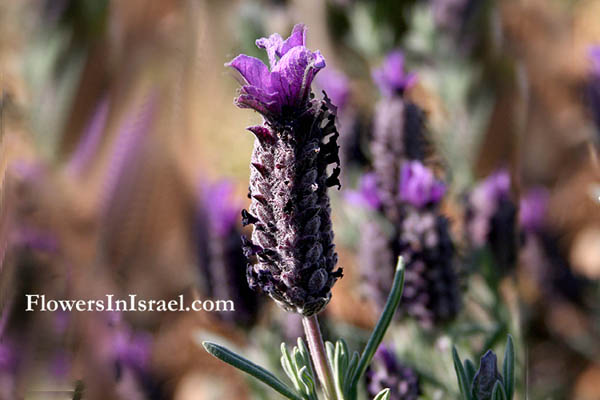
| Inflorescence: | Nearly cylindrical flower heads at the top of a long peduncle; each head opens about 100 flowers spread over a period of 3-4 weeks; medium-sized plants produce about 30 inflorescences | |
| Flowers: | Hermaphrodite; dark purple flowers in spikes up to 3 cm, topped by purple bracts | |
| Fruits / pods: | No seed pod. Each individual flower produces seeds which are inside the calyx; seeds are small flattish dark brown nuts; four seeds from each individual flower on the flower spike | |
| Flowering Period: | February, March, April, May | |
| Habitat: | Sand | |
| Distribution: | The Mediterranean Woodlands and Shrublands, Montane vegetation of Mt. Hermon | |
| Chorotype: | Mediterranean | |
| Summer shedding: | Perennating |
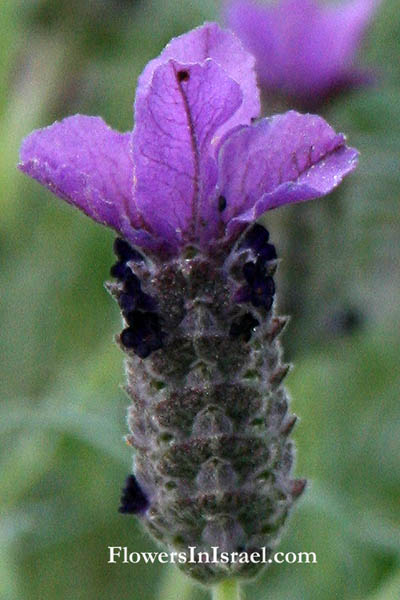
Derivation of the botanical name: Lavandula, Latin, lavare, meaning "to wash," and refers to the Roman custom of scenting bath water with the leaves and flowers of this aromatic plant. stoechas, στοιχαϛ, French lavender named from the Greek name for some islands of the Marseilles coast, the Islands of Stoechades, renamed since as the Iles de Hyeres; The Greeks had named these islands "Stoechades", "the rows." The Hebrew name: אזוביון, ezovion, (Post Biblical Hebrew) lavender; perhaps diminutive formed from אזוב,ezov.
|