Common Gladiolus, Corn-flag,
Hebrew: סייפן התבואה, Arabic: الدلبوث الإيطالي
| Scientific name: | Gladiolus italicus Miller | |
| Synonym name: | Gladiolus segetum Ger-Gawler | |
| Common name: | Common Gladiolus, Corn-flag | |
| Hebrew name: | סייפן התבואה | |
| Arabic name: | الدلبوث الإيطالي | |
| Plant Family: | Iridaceae, אירוסיים |
|
| Life form: | Geophyte | |
| Stems: | Up to 75cm; generally unbranched, rounded but flattened, erect, glabrous | |
| Leaves: | Alternate, rosette, lanceolate, entire margins | |
| Inflorescence: | Spike of 6-16 flowers | |
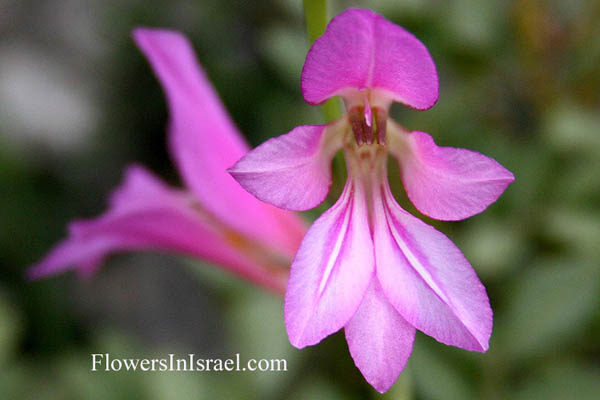
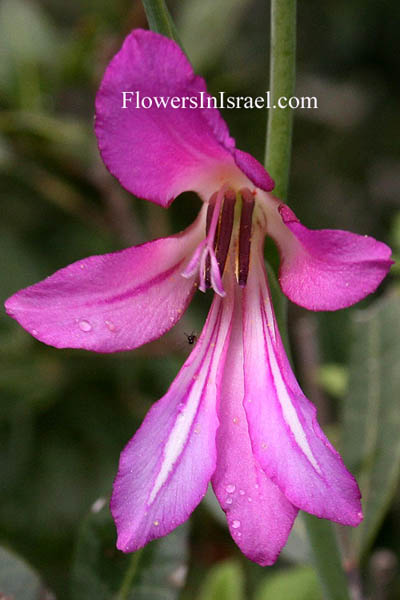
| Flowers: | Pink; unscented; funnel-shaped; 3 stamens; filaments 5-8mm, brownish-purple; anthers longer than filaments, yellow | |
| Fruits / pods: | Capsule, loculicidal | |
| Flowering Period: | March, April | |
| Habitat: | Batha, Phrygana | |
| Distribution: | Mediterranean Woodlands and Shrublands, Semi-steppe shrublands, Shrub-steppes | |
| Chorotype: | Med - Irano-Turanian | |
| Summer shedding: | Ephemeral | |
| Protected Flower, צמח מוגן: | Yes |
Derivation of the botanical name: Gladiolus, Latin gladius, sword; gladiolus, small sword. So called by Pliny in reference to the plant's sword-shaped leaves. italicus, Italian. סייפן,(Hebrew) seifan constructed from sayif 'sword'
LXVIII. The other plants of the same kind differ in the leaf : asphodel has an oblong, narrow leaf ; the squill one broad and flexible ; the gladiolus one that its name suggests.^ ^ Gladiolus, i.e., " little sword." 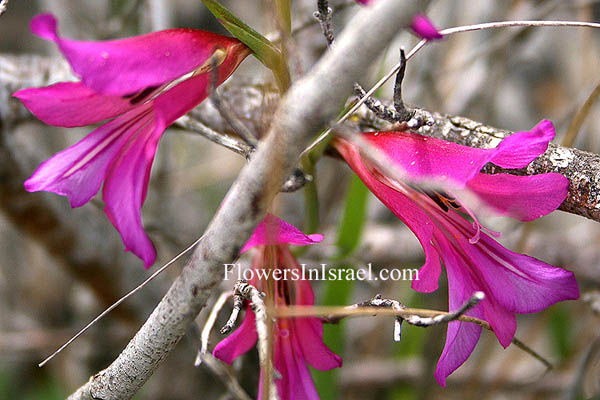
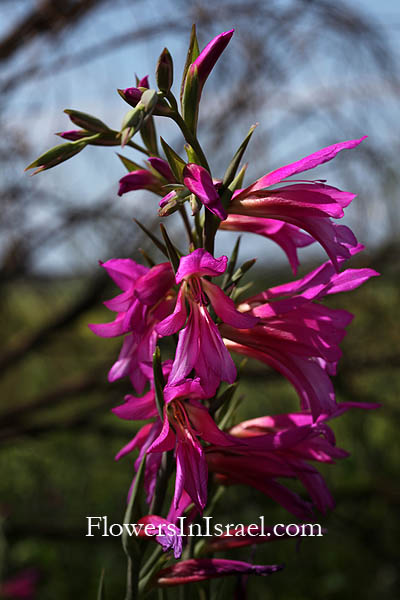
Location: Bene Zion Nature Reserve 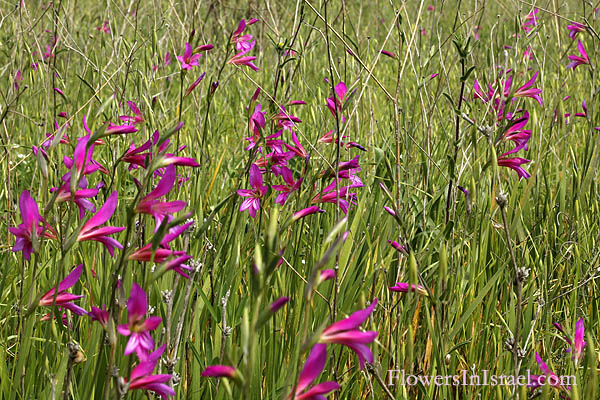
Location: Bene Zion Nature Reserve 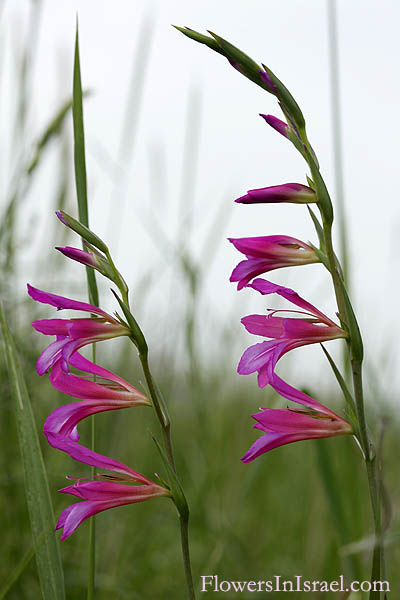
Location: Bene Zion Nature Reserve |