Hebrew: שיטה כחלחלה, Arabic: أكاسيا ساليغنا
| Scientific name: | Acacia saligna Labill) H.L.Wendl. fil | |
| Synonym name: | Acacia cyanophylla Lindley | |
| English name: | Golden-wreath Wattle, Orange Wattle, Blue-leaf Wattle | |
| Hebrew/שם עברי: | שיטה כחלחלה | |
| Arabic/الاسم العربي: | أكاسيا ساليغنا | |
| Español: | Acacia de hoja azul | |
| Plant Family: | Fabaceae/Mimosaceae, שיטיים |
|
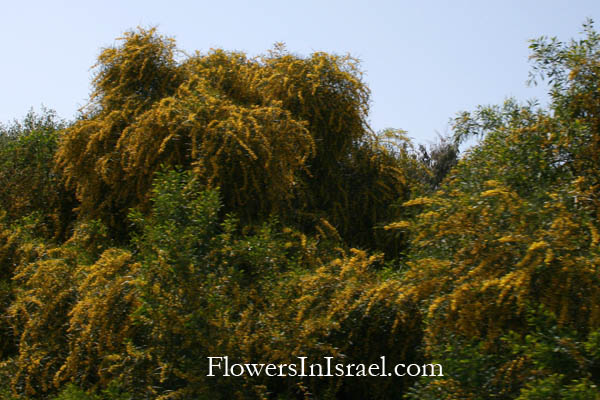
| Life form: | Tree | |
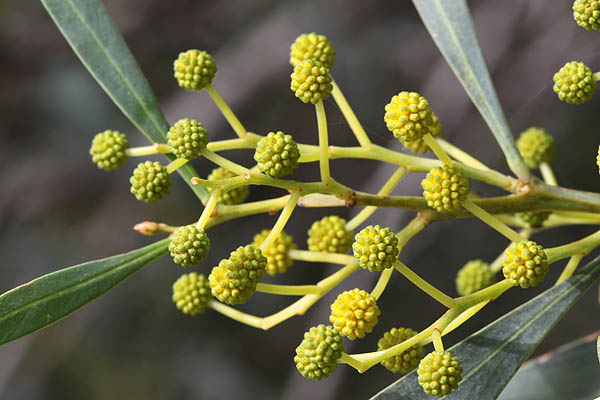
| Leaves: | Alternate | |
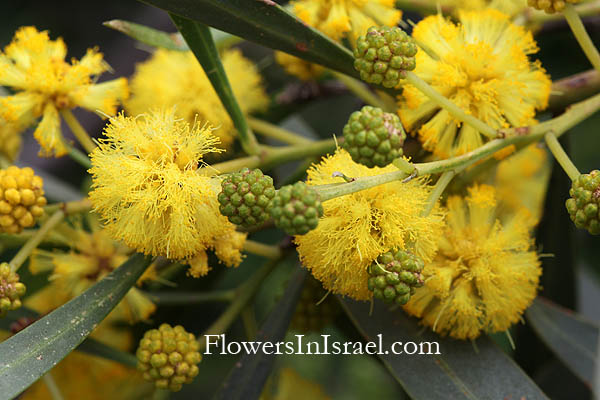
| Flowers: | Yellow-orange | |
| Flowering Period: | March, April | |
| Habitat: | Light soils | |
| Distribution: | The Mediterranean Woodlands and Shrublands | |
| Chorotype: | Australian | |
| Summer shedding: | Perennating |
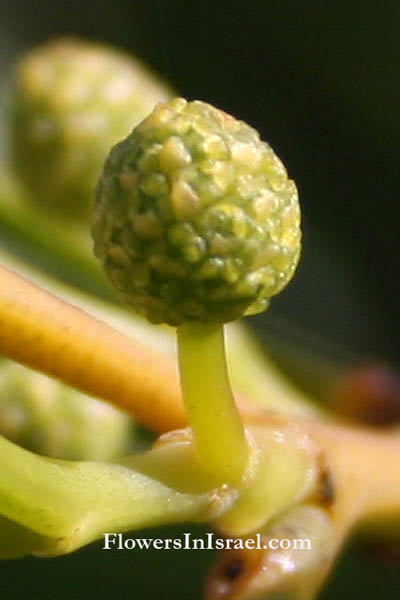
Derivation of the botanical name: Acacia, from the Greek word akis, meaning a point or a barb. saligna, willowy, resembling willow. cyanophylla, with blue leaves. The hebrew word: שיטה, shittah (Acacia, tree and a wood), borrowed from Arabic sant, سنط, in ancient Egyptian: Sndt, Sntt.
|